
























Last Updated on July 28, 2026 by Van Phillips
I had a conversation this week that took me from 1863 all the way to 2026, and by the time we landed, I wasn’t thinking about history anymore. I was thinking about trust.
Let me back up.
We started with the paper trail — Emancipation Proclamation, Reconstruction, Plessy, Brown, the Civil Rights Act, all the way up to Shelby County and the affirmative action ruling in ’23. That’s the official record. Law changes, then culture drags its feet behind it, then law changes again to catch up. You’ve heard that story. I’ve told versions of it on this blog before.
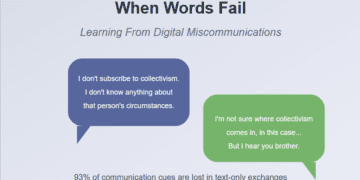
But the real conversation started when I said the quiet part out loud: I don’t move through the world as “African-American.” I’ve never set foot on that continent. I was born here — that makes me American, full stop. And I don’t move as “Black” either, because that’s a color in a box of Crayolas, not a description of who I am. Strip away the melanin and the features and we’re looking at the same wiring underneath. What actually divides people is character, not complexion.
So where does that leave me? Individualist first. Tribalist second. Never a collectivist.
And that’s not a cop-out from the real history — racism is real, its effects are real, redlining moved real money in a real direction and I’m not pretending otherwise. It just means I don’t build my strategy around a label. I build it around a tribe — chosen, purposeful, bound by shared goals — and I put that tribe first, work with other tribes when interests align, and I never, ever beg for a seat at somebody else’s table.
“The tribe should never have to beg for a seat. Economic independence and self-reliance is always the priority.”
That’s the thesis. Now let me show you where it got tested.
The Greenwood Problem
Every conversation about Black economic self-reliance eventually lands on Tulsa — Greenwood, “Black Wall Street,” the district that built its own banks, hotels, theaters, and doctors’ offices out of nothing but internal capital circulation. It’s the proof text. Five fingers working as one hand.
Then in 1921, a mob burned it to the ground, and local law enforcement either stood aside or helped.
Here’s the uncomfortable part I had to sit with: that’s not a flaw in the self-reliance model. That’s an outside force nullifying it with violence, and the state doing nothing to stop it. So if Tulsa is your only example, the lesson looks like “self-reliance gets you killed.”
But Tulsa wasn’t the only example. Durham, North Carolina ran the same playbook — Mechanics and Farmers Bank, North Carolina Mutual Life — and it wasn’t just an idea, it lasted decades. Mound Bayou, Mississippi, an all-Black town founded in 1887, ran its own hospital and cotton economy into the 20th century. Same blueprint. No massacre.
The difference wasn’t the model. It was exposure. Greenwood was visible, land-valuable, and sitting right next to a white commercial district that wanted what it had. Durham and Mound Bayou weren’t positioned to trip that same wire.
That’s the version of Black Wall Street I actually believe in — not “it can’t be touched,” but “position it so it doesn’t need to be touched.” Build density first. Be selective about who you let in. Coordinate the hand before you extend the fingers outward.
The Threat Changed. Did the Strategy?
Here’s where I had to be honest with myself about what year it is.
Nobody’s riding up on a Black-owned credit union in 2026 with torches. The mob-with-guns threat that took Greenwood doesn’t really exist in that form anymore. But something quieter replaced it — capital gravity. Integration gave individuals access to mainstream banks, and Black-owned banks lost deposits as a direct result. Not violence. Just convenience, pulling capital out of the internal system and into the bigger one, one account at a time.
That’s the modern version of the same fight, and it’s actually harder to see coming, which makes it more dangerous, not less.
But here’s the flip side, and this is the part of the conversation that actually changed how I think about the opportunity in front of us right now:
| Durham’s Era (1900s–1950s) | Now (2026) |
|---|---|
| Needed a physical bank, a charter, a building | Can build a credit union, a fund, a digital-first capital vehicle |
| Needed geographic clustering — customers walked to you | Distribution has no gatekeepers — commerce doesn’t need a zip code |
| Capital formation was slow, expensive, gated | Capital formation is cheap and abundant |
The barriers that used to protect insiders — the cost of a bank charter, the need for physical proximity — are gone. Not just for us. For everybody. Which means the opportunity is real, but so is the competition, because the playing field just got level for every tribe at once. Execution matters more now, not less.
The Bottleneck Isn’t Money. It’s Trust.
When I actually sat with the question of what’s holding a tribal, self-reliant economy back today, capital wasn’t it. There’s more ways to make money now than at any point in our history. What’s scarce is trust — and coordination right behind it.
Look at who’s already running this playbook successfully: Korean-American kye rotating credit circles. Gujarati chit funds. The Hasidic diamond district, where a dealer hands another dealer a bag of stones on a handshake. None of that runs on warm feelings. It runs on enforcement — defection gets seen instantly, and it costs everything. You don’t just lose a deal, you lose the network you can’t survive without.
That’s the piece I don’t hear enough people talk about when they invoke “buy Black” or “circulate the dollar.” Telling people to prioritize the tribe doesn’t survive contact with a better offer from outside unless there’s a real mechanism behind it — not a slogan, an actual structure. A rotating fund. A credit registry. Real cost of exit. Something that makes staying in the tribe the rational move, not just the loyal one.
“5 fingers are separate, but together they form a hand.”
That only works if the hand can actually close. A hand that opens the second something better walks by isn’t a fist, it’s just five fingers that happened to be near each other.
Where I Land
I’m not asking anybody to adopt my framework wholesale. I’m asking you to sit with the question the way I had to: if capital’s not the bottleneck anymore, and the mob-with-torches threat is mostly gone, what’s actually stopping the next Durham from getting built right now, in 2026, with tools Mechanics and Farmers Bank never had access to?
My answer is trust infrastructure — the unglamorous, unsexy work of building the mechanism, not just preaching the mission.
Yours might be different. But if you’re still waiting on a seat at somebody else’s table, I’d ask you the same thing I had to ask myself this week: are you building a hand, or are you just holding up five separate fingers and calling it unity?
Talk to me in the comments — where do you think the real bottleneck sits for you: capital, trust, or something I haven’t named yet?