




















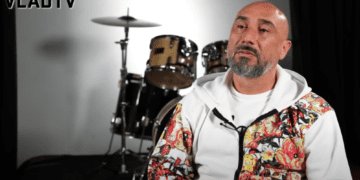













I was watching “It Is What It Is” on YouTube the other day, and Mase and Cam’ron got into something that’s been sitting with me ever since. They were talking about the Rooney Rule, that NFL policy that requires teams to interview at least one minority candidate for head coaching and senior football operation jobs. The conversation went deeper than I expected, and honestly, it captured something real about how we think about opportunity and progress in this country.
Mase’s Take: Tokenism Ain’t Progress
Mase put it plain:
“It’s almost like the Rooney rule, right? Like he made a rule where he says at least one black person got to be interviewed. That’s not to me. I just see it different. My ears are different. I hear that like just a token black nigga could get in. I’m, you know, I ain’t on no black trip. I’m just telling you what I honestly perceive. You’re not doing us a favor. Doing us a favor is making sure the right person get the job. If I’m qualified, if it’s 20 black people, then it should be 20 interviews. Just to say you’re going to make sure that one black person get an interview. That’s not really helping us.”
I felt that. Because what Mase is saying is that the Rooney Rule, on its face, sounds like it’s setting the bar at the absolute minimum. One interview. Not one hire. Not even a genuine consideration. Just check the box, get your token interview in, and move on to who you were probably gonna hire anyway. That’s not opportunity. That’s performance.
When you only have to interview one person, you’re basically telling the world that diversity is a chore, not a value. You’re saying, “We’ll do the bare minimum to avoid looking bad.” And Mase is right to push back on that. If there are 20 qualified Black candidates, why should only one get through the door? The rule itself seems to cap the ceiling while pretending to raise the floor.
Cam’ron’s Response: But We Wasn’t Even Getting That
Then Cam came back with the context:
“But what the Rooney rule, and I get where you coming from, Mase, I’m not saying you’re wrong, but basically they’re saying you have to at least interview a black nigga because black niggas wasn’t getting interviews at all. That’s why the rule came in effect. It was really one of them rules saying, ‘Goddamn, can we get an interview?’ And Mase, you’re right. It could be like, ‘Yo, let’s get this black nigga in here so we can hurry up and get him out.’ But that was the real reason that the rule was set in place cuz niggas wasn’t even getting the fake let him in here so we could let him out type vibe. So I get exactly what you’re talking about. But the Rooney rule doesn’t mean you’re going to get hired.”
And that’s the part that hit different. Cam’s reminding us where we started from. Before the Rooney Rule came into effect in 2003, the NFL had a serious problem. The league was majority Black when you looked at the players, but the coaching ranks and front offices? That was a whole different story. Black coaches weren’t just underrepresented. They were practically invisible. The Rooney Rule wasn’t created because the NFL was doing fine and wanted to do better. It was created because things were so bad that even a mandatory interview felt like progress.
The Numbers Don’t Lie
Let me show you what I’m talking about. When the Rooney Rule was implemented in 2003, there were only three Black head coaches in the NFL out of 32 teams. That’s less than 10 percent. By 2006, the number had climbed to seven. That’s still only about 22 percent, but it was movement. As of the 2024 season, we’re looking at six Black head coaches out of 32 teams, which puts us right back around 19 percent.
Now compare that to the player population, which has consistently been around 57-58 percent Black for years. The gap between who’s playing and who’s coaching tells you everything about why the Rooney Rule exists in the first place. We got dudes breaking their bodies on the field, but when it comes to calling the plays from the sideline, suddenly the qualifications get real specific.
So Who’s Right?
Here’s the thing: both of them are. That’s what makes this conversation so real.
Mase is right that tokenism is insulting. When you know you’re only in that room to satisfy a requirement, not because they genuinely see you as a contender, that’s degrading. It reduces your qualifications, your experience, your whole career down to a checkbox. And worse, it lets organizations pat themselves on the back for “doing diversity” without actually changing anything. They get to point to their compliance while keeping the same power structures in place. That’s not progress. That’s just better PR.
But Cam’s right too. The Rooney Rule exists because we couldn’t even get that fake interview before. At least now there’s a foot in the door, even if it’s just barely cracked open. At least now there’s a conversation happening, even if it’s performative half the time. At least now people have to pretend to consider you, which is somehow still better than not being considered at all.
That’s the bitter reality. Sometimes you gotta celebrate getting the scraps because before, you wasn’t getting fed at all.
The Real Problem: Rules Can’t Change Hearts
The deeper issue is that rules like the Rooney Rule expose a fundamental problem: you shouldn’t need a mandate to do the right thing. The fact that the NFL had to create a policy forcing teams to interview minority candidates tells you that left to their own devices, they wouldn’t. And that’s the uncomfortable truth sitting underneath this whole debate.
The Rooney Rule is a Band-Aid on a bullet wound. It addresses a symptom, not the disease. The disease is the old boys’ network, the tendency to hire people who look like you, talk like you, came up the same way you did. It’s the assumption that there’s a “right” way to be a head coach, and coincidentally, that way tends to look a whole lot like the people who’ve always had power.
Real change wouldn’t need a rule. Real change would mean that when organizations look for the best person for the job, they’d naturally end up with a diverse pool of candidates because they’d actually be looking at qualifications instead of comfort and familiarity. Real change would mean Black coaches wouldn’t need to be twice as good to get half the opportunity.
Where Do We Go From Here?
I think the answer is that we need the Rooney Rule and we need to demand more than the Rooney Rule. We need to acknowledge that it was a necessary step while also refusing to accept it as the destination.
We need to push for what Mase is talking about: actual equity, not just the appearance of it. If you got 20 qualified candidates and 15 of them are Black, then yeah, you should be interviewing more than just one. The rule should be about finding the best person, period. Not about satisfying a quota.
But we also can’t forget what Cam’s saying: this rule exists because we had to fight just to get our foot in the door. That’s the history we’re working with. That’s the reality that shaped where we are today.
The real question is whether we’re gonna keep settling for crumbs or demand the whole meal. The Rooney Rule got us in the room. Now we gotta make sure we’re not just there for show. We gotta make sure the next rule, the next policy, the next change actually puts qualified people in positions of power, not just in interviews they were never gonna win anyway.
Both Mase and Cam are right because they’re both describing different parts of the same broken system. Mase is looking at what we deserve. Cam’s looking at what we had to fight for. And the gap between those two things? That’s the work that’s still left to do.
What do you think? Are policies like the Rooney Rule genuine progress, or just sophisticated tokenism? Drop your thoughts in the comments.