

































I was reading Financial Samurai today — one of my favorite spots for real financial perspective — and Sam hit me with something that I couldn’t shake. He wrote:
“Meta and Google just had their ‘big tobacco’ moment after California jurors found Meta and YouTube negligent in the design of their platforms, awarding a 20-year-old plaintiff $3 million in damages tied to social media addiction and mental health struggles. We all know social media can be addictive, just as we’ve long known tobacco is addictive. But this verdict raises a bigger issue. If one case can win, many more may follow. The potential liability for social media companies could run into the billions. For employees at these companies, this creates a real dilemma. Do you stay and continue earning a high income while knowing your product may be causing harm to adults and children? Or do you walk away to find something less heavy on your soul?”
Sam’s employee dilemma is real and worth sitting with. But the question that’s been occupying my mind runs deeper than that. The real question — the one that has massive implications for investors, regulators, parents, and everyday users — is this: Will social media go down just like tobacco did?
That’s the fascinating question. And I’m going to break it all the way down.
What Just Happened in Los Angeles — And Why It’s a Big Deal
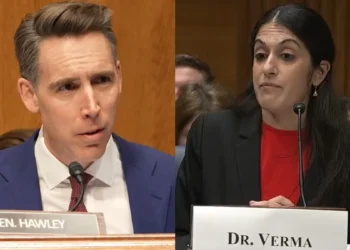
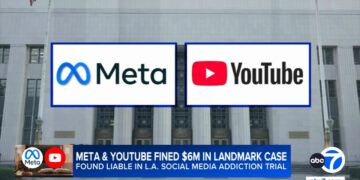
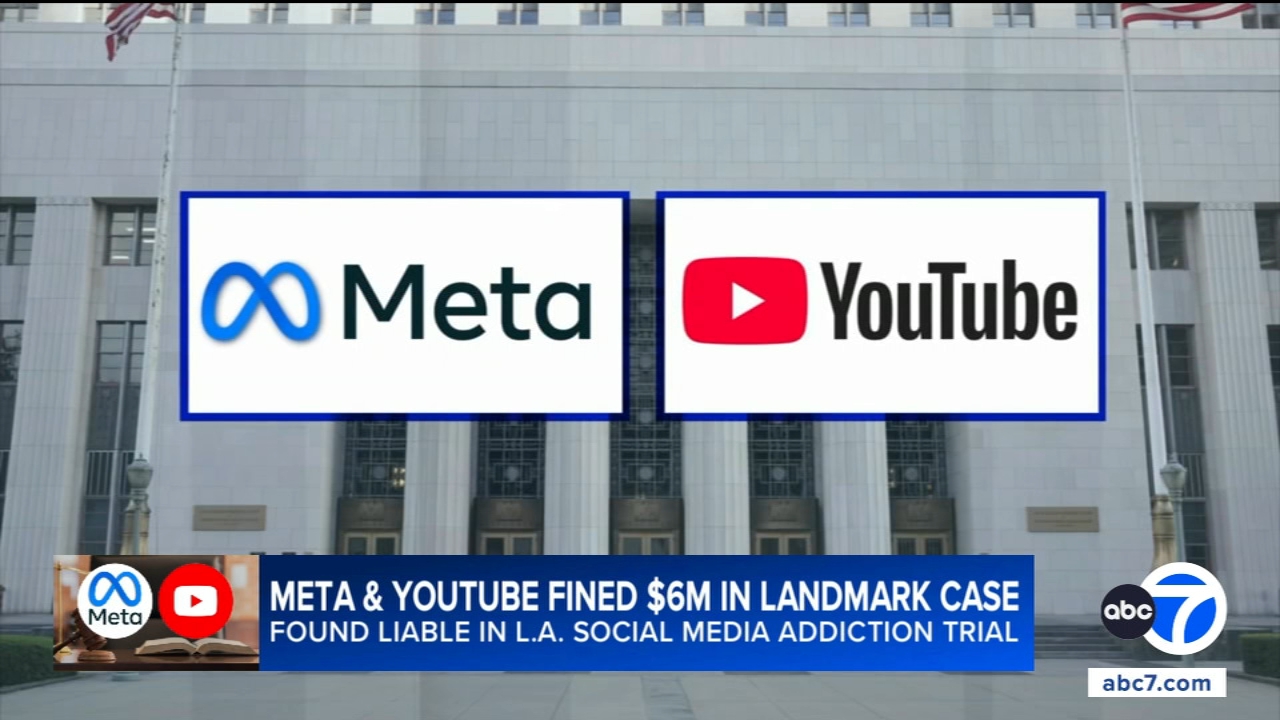
On March 25, 2026, a Los Angeles County Superior Court jury found Meta and YouTube liable on all counts in what is being described as a landmark bellwether trial. The jury found that Meta and YouTube were negligent in the design of their platforms, knew their design was dangerous, failed to warn of those risks, and caused substantial harm to the plaintiff — a 20-year-old California woman identified in court as Kaley, or KGM. CNN
The jury awarded $3 million in compensatory damages and an additional $3 million in punitive damages — with Meta on the hook for 70% and YouTube for the remaining 30%. CNBC
Now, on the surface, $6 million might sound like pocket change to companies with market caps in the hundreds of billions. But don’t sleep on what this verdict actually represents.
Kaley told the court she started using YouTube at age 6 and Instagram at age 9. By the time she finished elementary school, she had posted 284 videos on YouTube. She stopped engaging with family because of her social media use and began to suffer anxiety and depression at age 10, later being diagnosed with both. Al Jazeera
The platform features — infinite scroll, notification pings, algorithmic recommendations — were argued to exploit the same dopamine-driven reward pathways as slot machines and other recognized forms of behavioral addiction. Lanier Law Firm And a jury of twelve everyday people agreed.
What makes this truly significant isn’t the dollar amount. It’s the legal architecture that was successfully built. Plaintiff attorneys shifted the legal target away from the content people see on social media and instead put the spotlight on how these services were designed. NPR That’s a game-changer, because it sidesteps Section 230 protections that have historically shielded these companies. And it opens a door that’s going to be very hard to close.
Legal experts say the damages awarded will set a benchmark for similar cases, while the ruling could encourage more families with minors to take legal action. CBS News One legal scholar put it plainly: “It definitely could open the floodgates of litigation.”
Word. That’s exactly what happened with tobacco.
The Big Tobacco Playbook — A Brief History Lesson
To understand where this could go, you have to know the tobacco story because the parallels are almost eerie.
By the mid-1950s, individuals in the United States began suing tobacco companies. In the forty years through 1994, over 800 private claims were brought against tobacco companies in state courts. The tobacco companies were successful against essentially all of these lawsuits — only two plaintiffs ever prevailed, and both of those decisions were reversed on appeal. Wikipedia
Forty years. Eight hundred cases. Zero wins. The tobacco industry looked untouchable.
Then something shifted. States uncovered evidence that tobacco companies had known for years about the damage caused by their products but had conspired to suppress the information. PubMed Central And rather than suing on behalf of individual smokers — which kept losing — attorneys general launched a novel theory: the states themselves were bearing the Medicaid costs of treating sick smokers who had been deceived. That flipped the script entirely.
In the mid-1990s, more than 40 states commenced litigation against the tobacco industry under various consumer-protection and antitrust laws. Wikipedia And in November 1998, it was over. The litigation culminated in the 1998 Master Settlement Agreement, under which tobacco companies agreed to pay $206 billion in damages — roughly $410 billion in today’s dollars. Calcali Tech
Between 1998 and 2019, U.S. cigarette consumption dropped by more than 50%, and regular smoking by high schoolers dropped from nearly 36% in 1997 to just 6% in 2019. National Association of Attorneys General
The industry didn’t disappear, but it was permanently restructured — financially battered, reputationally destroyed, and legally leashed. The question is whether social media is walking the same road.
The Parallels Are Almost Too Real
Let me put this side-by-side, because when you lay these two stories next to each other, it gets uncomfortable fast:
| Factor | Big Tobacco | Big Social |
|---|---|---|
| Knew about harms | Internal research on addiction & cancer suppressed | Internal documents showed Meta estimated 4M+ users under age 13 on Instagram as far back as 2015 Lanier Law Firm |
| Denied addiction | “Smoking is a choice, not an addiction” | Instagram’s Adam Mosseri called addiction classification “problematic,” even as revenue depended on engagement CNBC |
| Target demographic | Marlboro Man → Joe Camel (targeting youth) | Algorithms designed to hook users starting at age 6–9 |
| Legal shield | “Warning label = informed consent” | Section 230 immunity |
| Legal breakthrough | States suing for Medicaid costs (novel theory) | Suing over platform design, not content (novel theory) |
| Pendng cases | 800+ cases over 40 years, then a flood | 2,000+ pending lawsuits; federal trial set for summer 2026 in Northern California CNBC |
| Settlement horizon | 1950s research → 1998 MSA (~45 years) | Research mounting since ~2012 → 2026 first verdicts |
The structural DNA of these two stories is nearly identical. Companies with vast resources, armed with internal knowledge of harm, deployed delay-and-deny strategies for years — until the legal architecture evolved enough to outflank them.
But Here’s Where It Gets Complicated
Real talk — I’m not going to pretend this is a clean one-to-one comparison, because it ain’t. There are some fundamental differences between cigarettes and social media that will shape how this unfolds. These differences matter a lot, and they cut in both directions.
Social media is embedded in society in a way tobacco never was. A cigarette has one function — you burn it and inhale it. Instagram is how your grandmother sees your baby photos. It’s how small businesses advertise. It’s how activists organize, journalists report, and communities form. The social utility of these platforms is genuinely massive and real, which makes prohibition-style outcomes essentially impossible.
There’s no “quit social media” equivalent to quitting smoking. You can go cold turkey on cigarettes. Quitting social media often means stepping outside of how modern professional and social life operates. The social cost of abstinence is far higher.
These companies can actually modify their products. Philip Morris couldn’t make a safe cigarette. Meta absolutely can — and to some degree already has — modify its algorithm to reduce addictive design features. In September 2024, Meta introduced Instagram Teen Accounts, which automatically place more safety restrictions on users between the ages of 13 and 17. Northeastern Global News Whether these changes are substantive or cosmetic is another conversation, but the engineering flexibility exists.
The global nature of the platforms. Tobacco could be regulated country by country because cigarettes are physical products. Social media is borderless. You can regulate Meta’s practices in the U.S. while the platforms continue operating globally with minimal friction.
Section 230 is still alive. While the California case successfully navigated around it by focusing on design rather than content, one law professor noted this is just “one step in a much longer saga” and that “there’s a long way to go before you see something akin to the master settlement that this is often analogized to in the tobacco and opioid litigation.” ABC7
The Employee Dilemma Is Real — But It’s Not New
Sam’s question about employees is worth sitting with. Do you stay and collect a fat paycheck knowing your product might be wiring kids’ brains for anxiety and depression? Or do you walk?
This ain’t an abstract moral philosophy question. It’s the same dilemma that research scientists at R.J. Reynolds faced in the 1970s when internal memos were flying around about nicotine manipulation. Most of them stayed. Some rationalized it. A few eventually became whistleblowers — and those whistleblowers were a major reason the whole house came down.
The Frances Haugen moment in 2021 — when a Facebook data scientist walked out with internal documents showing the company knew Instagram harmed teenage girls’ body image — is the social media equivalent of those tobacco whistleblowers. And if history repeats, she won’t be the last. Where there’s one, there will be more. And every additional insider who walks out with documentation makes the legal cases that much stronger.
So Will Social Media Fall Like Tobacco? Here’s My Take
Here’s where I land on the real question.
Social media won’t die. But it will be fundamentally restructured — and we’re watching it begin. The more accurate analogy may not be tobacco’s near-destruction, but rather the pharmaceutical industry’s opioid reckoning. Purdue Pharma didn’t cease to exist as a concept, but it was dismantled, its executives faced criminal liability, and the entire industry had to submit to new guardrails. The product — pain medication — still exists. It just operates under a completely different legal and regulatory framework now.
That’s where I see social media going:
- A wave of financial settlements that run into the billions as the 2,000+ pending cases resolve — likely through a negotiated framework similar to the MSA
- Algorithm transparency requirements forced by either legislation or court orders
- Age verification mandates that actually have teeth — not the performative ones we have now
- Design restrictions on the most addictive features, particularly for users under 18
- Internal document disclosures — the thing that truly broke Big Tobacco was when the secret research became public. The same reckoning is coming for Meta, Google, and others
What won’t happen is people logging off Instagram permanently. The platforms are too woven into commerce, culture, and communication for that. But the era of unregulated, consequence-free algorithmic manipulation of children’s developing brains? Deadass, that era has an expiration date — and I think we just saw the first jury stamp it.
Lawyers involved in these cases say the Los Angeles verdict is a promising early sign that the dam is breaking in favor of industry-wide changes. NPR
History doesn’t repeat itself exactly. But it rhymes hard. And right now, sitting here in 2026, watching a California jury hold Zuckerberg’s company responsible for what it did to a six-year-old’s brain? That sounds a lot like a rhyme I’ve heard before.
The clock is ticking. And the meter is running.
What do you think — is social media heading for a Big Tobacco-style reckoning, or will the industry adapt and survive intact? Drop your thoughts in the comments. This conversation is just getting started.