
































Last Updated on August 20, 2026 by Van Phillips
I’ve been scrolling YouTube lately and the algorithm keeps serving me the same pitch. Guys — some with real platforms, like Vlad — pushing this idea that borrowing against your stock portfolio is the smart move. The “sophisticated” money move. The thing rich people do that the rest of us just don’t know about yet.
I sat with it. I let it marinate. And I still come back to the same place every time:
I would never pay the bank interest on my own money. That’s not sophistication. That’s a fee for access to something I already own.
Let me break down why I see it that way, and while I’m at it, let me tell you why I’m also not buying the other trend going around — the one telling you to skip the emergency fund and throw that cash in the market instead.
What They’re Actually Selling You
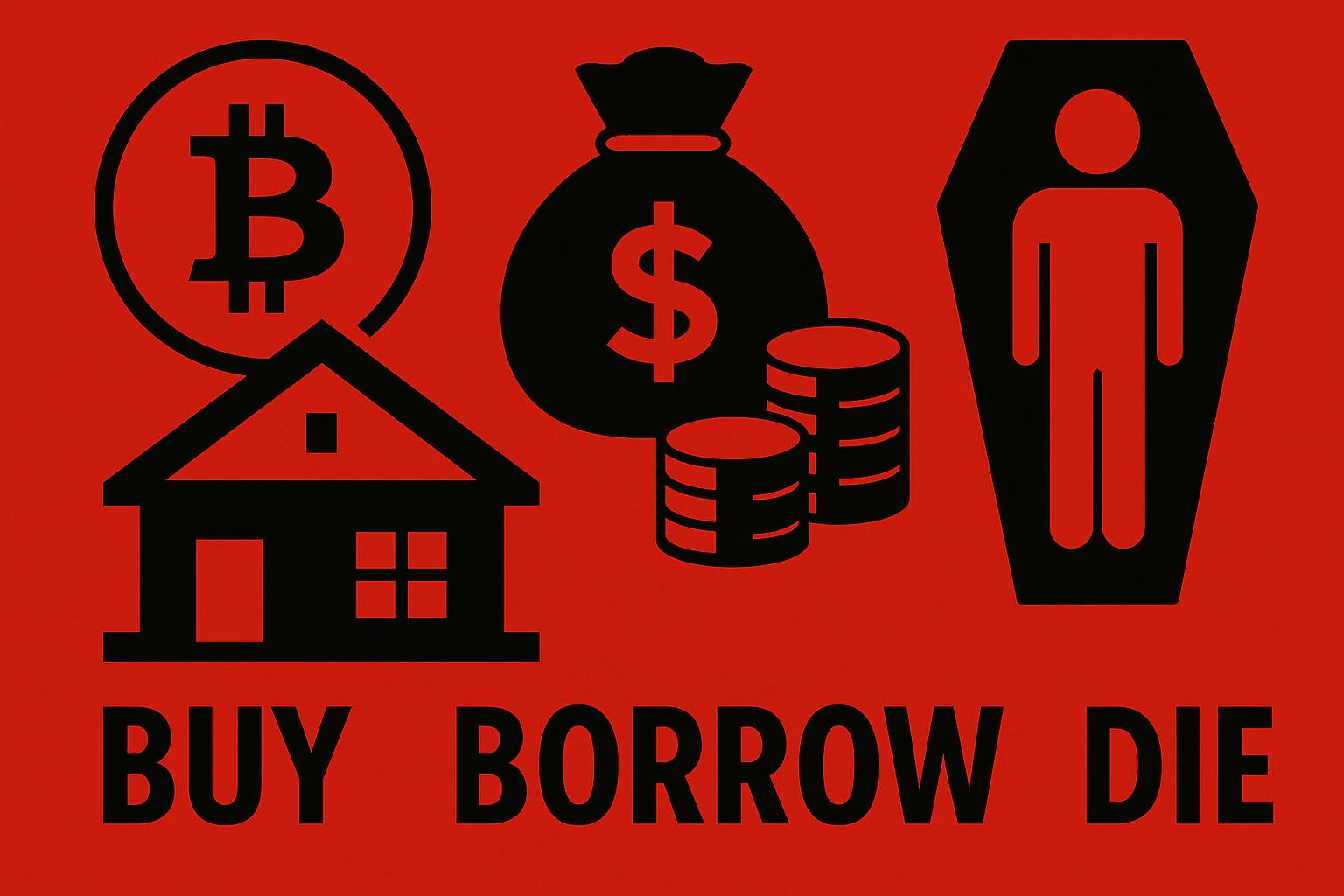
The strategy has a name in the finance world: buy, borrow, die. Here’s the pitch in three steps:
- You buy stock and let it appreciate
- Instead of selling it (which triggers capital gains tax), you take out a loan against it — usually through something called a securities-backed line of credit, or SBLOC
- You die still holding the stock. Your heirs get what’s called a “stepped-up basis,” meaning that unrealized gain essentially disappears for tax purposes, and the loan gets settled from the estate
On paper, that sounds clean. No tax bill, no selling your position, portfolio keeps compounding while you’re living off borrowed cash. Investopedia and half the finance influencer world will walk you through the mechanics like it’s a cheat code.
But a cheat code only works if the game plays fair. And the market doesn’t play fair.
The Math They Don’t Put On Screen
Here’s the part that never makes it into the 60-second clip: this only works if your portfolio’s return beats the loan’s interest rate, after taxes. That’s not a guarantee. That’s a bet. And the risk doesn’t stop there — if your collateral value drops enough, the lender can hit you with a margin call and force a sale at the worst possible moment, which is the exact outcome you were supposedly avoiding by not selling in the first place.
So you took on debt, you took on rate risk, and you still might end up selling into a down market. That’s not avoiding risk. That’s relocating it and adding interest on top.
| Sell the Stock | Borrow Against It (SBLOC) | |
|---|---|---|
| Tax hit | One-time, known cost (cap gains) | None upfront — but deferred, not eliminated |
| Ongoing cost | None | Variable interest, accruing monthly |
| Worst case | You know your number today | Forced sale in a downturn + you still owe interest |
| Who it favors | Anyone who wants certainty | High-net-worth folks with an estate plan built around it |
| Control | Fully in your hands | Partially in the lender’s hands |
If I need the money, I’d rather sell the stock, pay what I owe Uncle Sam, and know exactly where I stand. I’m not interested in owing a bank on top of owing the IRS, especially when the IRS bill is fixed and the bank bill can grow on me.
Now Let’s Talk About This Emergency Fund Nonsense
There’s a newer wave of financial content — I call it “new age” finance — telling people to skip the emergency fund entirely. Their argument: don’t let cash sit there earning nothing, put it in the market and let it work.
I’ll say this plainly:
Having an emergency fund isn’t outdated advice. It’s the starting point for your entire money management journey.
My father instilled that in me a long time ago — you always keep something set aside, because you never know what’s coming. And here’s what the “just invest it” crowd conveniently skips over: emergencies cluster with bad markets. Layoffs spike during recessions. Recessions are exactly when your portfolio is down 20-30%. If your safety net is sitting in stocks, you’re forced to sell at the bottom to cover a bill that had nothing to do with the market in the first place. That’s not a strategy. That’s a trap disguised as optimization.
My rule has always been simple:
- Six months of salary, minimum — set aside, no exceptions
- Risk-free instrument — I’m not trying to grow this money, I’m trying to protect it
- Liquid and accessible — I need to be able to touch it fast if life happens
Right now, mine sits in SWVXX, Schwab’s money market fund. It’s solid, it’s liquid, and it’s doing its job. Though I’ll be honest with myself here — since I’m in New York and paying state tax on top of everything else, I’m going to look closer at whether a Treasury-only money market fund gets me a better after-tax yield than SWVXX, since Treasury interest is exempt from state tax and SWVXX holds some commercial paper that isn’t. Small detail, but small details add up over six months of sitting cash.
Where I Land
Both of these trends — borrow against your portfolio, skip your emergency fund — are being sold the same way: as the “smart” move that regular people just haven’t caught onto yet. But when you actually run the math and think through the downside, both of them ask you to trade certainty for risk, and call it sophistication.
I’ll take the boring, proven path every time. Sell what I need to sell. Keep my cushion in something that won’t disappear when I need it most. That’s not old-fashioned. That’s just not getting played.